Why jewelry retail demands a specialized approach The jewelry industry operates with unique complexi
Thu 12, 2026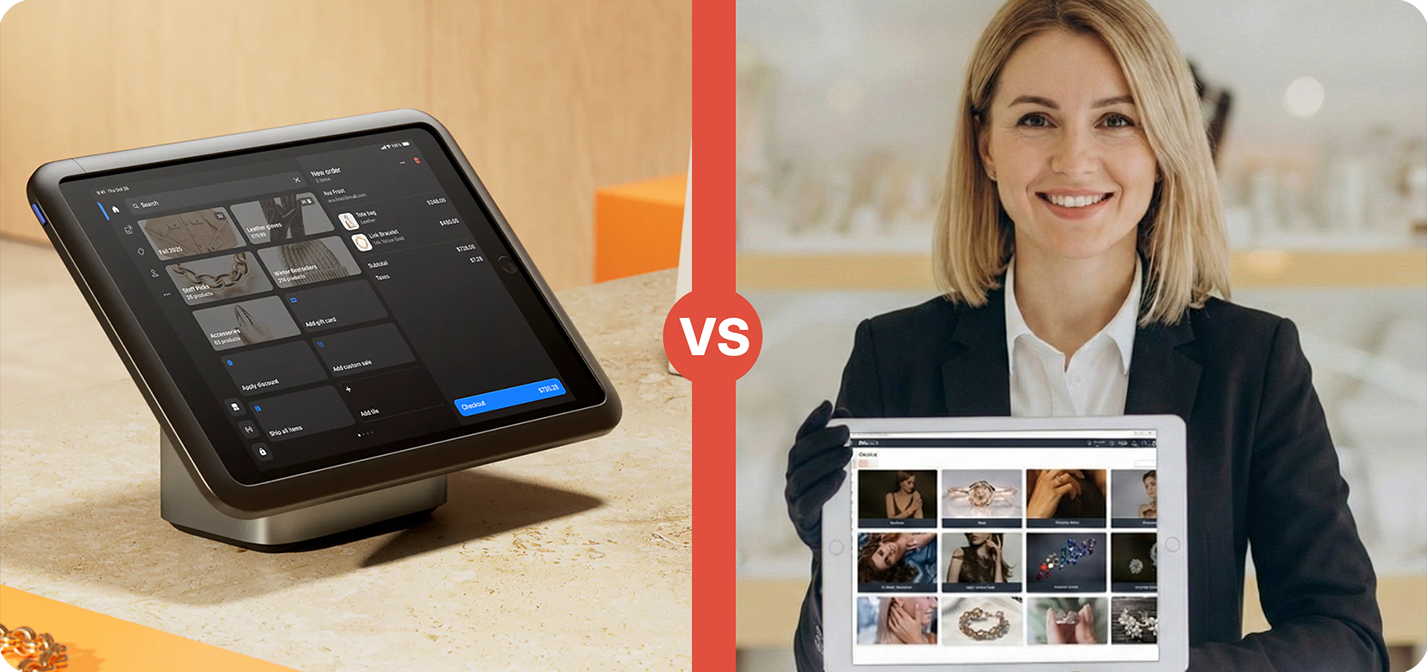

If you’re reading this, you’ve likely reached a critical milestone in your business journey. You’ve successfully built a brand, attracted a loyal customer base, and your operations are growing more complex every day. Perhaps you started with a simple system like Excel, a generic Point of Sale (POS) solution, or a platform like Shopify that was perfect for getting your initial online presence established.
Shopify is an excellent platform for e-commerce, providing a strong foundation for online sales and a user-friendly Point of Sale (POS) interface. It helped you hit your first milestones, manage basic inventory, and process transactions smoothly.
This initial success is a testament to your hard work. However, as a jewelry business matures, it inevitably encounters challenges that generic software was simply not designed to handle. The very tools that enabled your growth can quickly become the biggest bottleneck, forcing you and your team into time-consuming workarounds and manual data entry.
We understand the daily challenges of running a modern jewelry store. The solution isn’t to work harder, but to work smarter, by adopting a jewelry software solution that speaks the language of your industry.
Jewelry is not like selling books or clothing. Every piece, every transaction, and every customer interaction is layered with unique details that demand specialized management. When your system treats a one-of-a-kind engagement ring the same way it treats a mass-produced t-shirt, you are setting yourself up for errors and inefficiency.
For a typical jewelry store, inventory management is the most critical and complex operation. A generic POS or spreadsheet falls apart when faced with the granular data required for high-value items:
The moment a customer requests a custom design, a repair, or a simple ring sizing, the transaction moves beyond a simple point-of-sale function and into the workshop. This is where the cracks in non-specialized systems truly show.
Real-life example: Imagine a customer drops off a family heirloom for repair and resizing. In a generic system, this is often logged as a note in a spreadsheet or a paper job envelope.
How do you track the exact stage of the repair? How do you ensure the correct materials are allocated? How do you provide the customer with a real-time status update without calling the bench jeweler? The answer is usually a frustrating, manual process that wastes time and creates a poor customer experience.
Outgrowing a general system like Shopify POS is not just about needing a new cash register; it’s about making a strategic business decision to move from a basic Point of Sale to a comprehensive Jewelry POS solution.
This shift is about unifying your entire operation:
By adopting a specialized system, you stop managing workarounds and start focusing on profitability and customer service. You gain a single source of truth for every piece of inventory, every customer interaction, and every stage of production.
If you are currently using an outdated desktop system or relying on a patchwork of generic apps, you are not just risking inefficiency – you are risking your ability to scale.
A modern, web-based jewelry POS system like PIRO Retail offers mobility, security, and the ability to integrate with the other platforms you rely on, such as QuickBooks and Shopify. By choosing a specialized solution, you are making an investment that supports your business’s future growth, rather than limiting it to the capabilities of a general-purpose tool.
Outgrowing your current system is a positive sign. It means you are succeeding. Now is the time to ensure your operational foundation is as strong and sophisticated as the jewelry you sell.
Next Steps: It is worth considering whether your current system truly supports the unique demands and future growth of your jewelry business. If you find yourself constantly creating workarounds or struggling to manage the intricate details of your inventory and custom work, it may be time to explore a solution built specifically for you.
Q: Why can’t I just use more Shopify apps to manage my jewelry business?
A: While third-party apps can extend Shopify’s functionality, they often create a fragmented “patchwork” system. Each app has its own logic, interface, and data storage, which leads to manual data entry, synchronization errors, and a steep learning curve for staff. A specialized jewelry software like PIRO provides a single, unified platform where all data, from POS to workshop to inventory, is connected in real-time, eliminating the need for constant workarounds.
Q: What is the biggest difference between a generic POS and PIRO Retail?
A: The core difference is the ability to handle attribute-rich inventory. Generic systems are limited to basic SKUs and prices. PIRO is designed to track all the necessary jewelry-specific data points, metal fineness, exact weight, diamond 4Cs, and certificate links, all within a single, intelligent record. Furthermore, PIRO integrates the front-end POS with the back-office workshop, allowing for seamless tracking of complex custom orders and repairs.
Q: How does PIRO help manage the risk of fluctuating metal prices?
A: PIRO is built with the financial realities of the jewelry industry in mind. It includes built-in integration capabilities to track fluctuating metal prices and currency exchange rates. This allows you to calculate accurate costs, set margins dynamically, and protect your profitability against market volatility, a feature essential for any growing jewelry business.
Q: Is PIRO only for large jewelry businesses?
A: No. PIRO is designed for growing jewelers who have reached the limits of their current general-purpose systems, whether they are independent store owners or managers of a small chain. The software scales with your business, providing the advanced tools needed for complex inventory and custom work without the unnecessary complexity of an enterprise-level system.