The challenge of success: when your tools can’t keep up If you’re reading this, you’ve likely
Thu 22, 2026

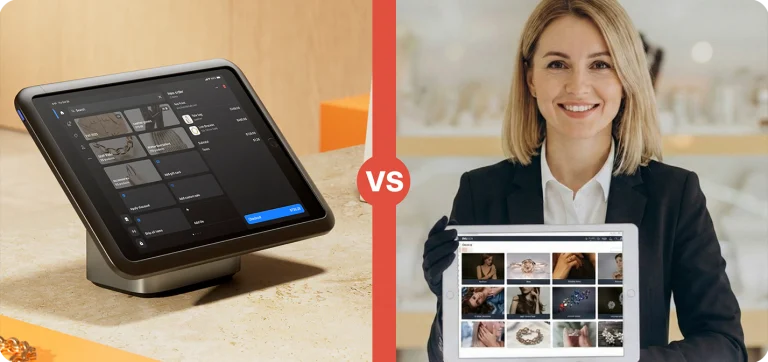
The jewelry industry operates with unique complexities that set it apart from general retail. Unlike a typical clothing or electronics store, a jewelry business deals with high-value, often unique items, intricate inventory details, and a significant component of custom work and repairs. These operational nuances mean that a generic Point of Sale (POS) system, while functional for basic transactions, often falls short in addressing the specific needs of a jewelry retailer. The consequences can range from inaccurate inventory tracking of precious metals and gemstones to inefficient management of bespoke orders and repairs, ultimately impacting profitability and customer trust.
In the pursuit of efficiency, some jewelry retailers might be tempted by POS systems that claim to be
“jewelry-friendly” but are, in essence, generic retail platforms with minor customizations. These systems often lack the deep-seated functionalities required for the unique operational demands of a jewelry business. While they might offer basic sales processing, they typically fail to provide the granular inventory control, specialized repair workflows, or real-time valuation capabilities that are critical for managing high-value assets and complex customer interactions. Retailers should exercise caution and thoroughly vet any POS solution to ensure it genuinely addresses the distinct challenges of the jewelry sector, rather than offering a superficial adaptation of a general retail system.
1. Granular, serialized inventory management
Why it’s crucial for jewelry: In general retail, inventory might be tracked by SKU and quantity. For jewelry, this is insufficient. Each piece often has unique attributes: specific gemstone type, cut, clarity, carat weight, metal purity, and even serial numbers for high-value items. A robust jewelry POS system must offer serialized inventory tracking, allowing retailers to manage each item individually. This is vital for accurate valuation, insurance purposes, and preventing loss.
Practical example: Imagine a diamond engagement ring. A generic POS might just record it as “Diamond Ring, SKU 123.” A specialized jewelry POS, however, would track its unique serial number, the specific GIA certificate details of the diamond, the metal alloy, ring size, and even its current location within the store or vault. This level of detail is critical for both sales and compliance.
2. Integrated repair and custom order management
Why it’s crucial for jewelry: A significant portion of a jeweler’s business often comes from repairs, custom designs, and modifications. These are not simple product sales; they involve tracking customer-owned items, managing materials (e.g., gold, specific stones), scheduling workshop time, and communicating progress to the customer. A generic POS system typically lacks the functionality to manage these complex workflows, leading to manual tracking, potential errors, and customer dissatisfaction.
Practical example: A customer brings in a family heirloom for resizing and stone replacement. A jewelry POS system should allow the creation of a detailed job order linked to the customer, specifying the work to be done, materials to be used, estimated completion date, and associated costs. It should track the item’s journey through the workshop, notify the customer of status updates, and seamlessly convert the job order into an invoice upon completion. This eliminates the need for separate spreadsheets or paper-based systems, reducing administrative burden and improving service quality.
3. Metal and gemstone tracking with real-time valuation
Why it’s crucial for jewelry: The value of jewelry is intrinsically linked to the fluctuating prices of precious metals and gemstones. A general retail POS system has no mechanism to account for these dynamic valuations. For a jeweler, the ability to track inventory by metal weight (e.g., grams of 14k gold) and gemstone characteristics (e.g., carat weight, clarity, color) and link these to real-time market prices is paramount for accurate pricing, cost analysis, and profitability.
Practical example: When purchasing raw materials or valuing existing stock, a jewelry POS should integrate with market data feeds to provide up-to-date pricing for gold, silver, platinum, and various gemstones. This allows for precise calculation of manufacturing costs for custom pieces and ensures that retail prices reflect current market realities, protecting profit margins against volatile commodity markets.
4. Memo management and consignment tracking
Why it’s crucial for jewelry: Many jewelers operate with inventory on memo (consignment) from vendors or suppliers. This means they hold goods that are not yet owned, and payment is only due upon sale. Managing memo inventory accurately is critical to avoid paying for unsold stock, ensure proper returns, and maintain clear financial records. Generic POS systems are not designed to differentiate between owned and consigned inventory.
Practical example: A jeweler receives a selection of high-end watches on memo from a distributor. The POS system should clearly mark these items as memo inventory, track their movement, and automatically generate reports for reconciliation with the vendor. This prevents accidental sales of unowned items and simplifies the complex accounting associated with consignment.
5. Robust customer relationship management (CRM) with purchase history
Why it’s crucial for jewelry: Jewelry purchases are often highly personal and significant events. Building lasting customer relationships is paramount. A generic POS might record basic customer information, but a specialized jewelry POS integrates a comprehensive CRM that captures detailed purchase history, preferences, anniversaries, and even gift recipient information. This enables personalized marketing, proactive service, and a deeper understanding of customer needs.
Practical example: A customer purchased an engagement ring a year ago. The POS-integrated CRM should allow the jeweler to easily access this purchase history, note the anniversary date, and perhaps suggest complementary pieces or offer cleaning services. This level of personalized engagement fosters loyalty and repeat business, turning one-time buyers into lifelong clients.
The “+1” feature: advanced reporting and analytics tailored for jewelry
While the previous five features address core operational needs, the “+1” feature elevates a jewelry POS system from merely functional to strategically invaluable: Advanced Reporting and Analytics tailored for the jewelry industry.
Why it’s crucial for jewelry: General retail reports focus on sales volume and basic inventory turns. Jewelry retail requires insights into specific categories like metal type performance, gemstone sales trends, average repair ticket value, custom order profitability, and memo inventory aging. Without these specialized reports, jewelers operate in the dark, unable to make informed decisions about purchasing, pricing, and marketing strategies.
Practical example: A jewelry POS with advanced analytics can reveal that certain gemstone types are consistently selling faster in specific price ranges, or that custom design work has a higher profit margin than ready-to-wear pieces. It can highlight slow-moving inventory by metal type or identify peak seasons for repair services. This data-driven insight allows retailers to optimize their stock, refine their marketing efforts, and ultimately increase profitability by focusing on what truly drives their business.
Choosing a POS system for a jewelry business is not merely a matter of selecting software that processes transactions. It is a strategic decision that directly impacts operational efficiency, inventory accuracy, customer satisfaction, and ultimately, profitability. The unique characteristics of jewelry retail – high-value items, complex inventory attributes, custom work, and consignment models – demand a system built specifically to address these nuances. Investing in a jewelry POS system with granular inventory control, integrated repair management, real-time valuation, memo tracking, robust CRM, and specialized analytics is not an extravagance; it is a fundamental requirement for sustainable success in this distinct industry.